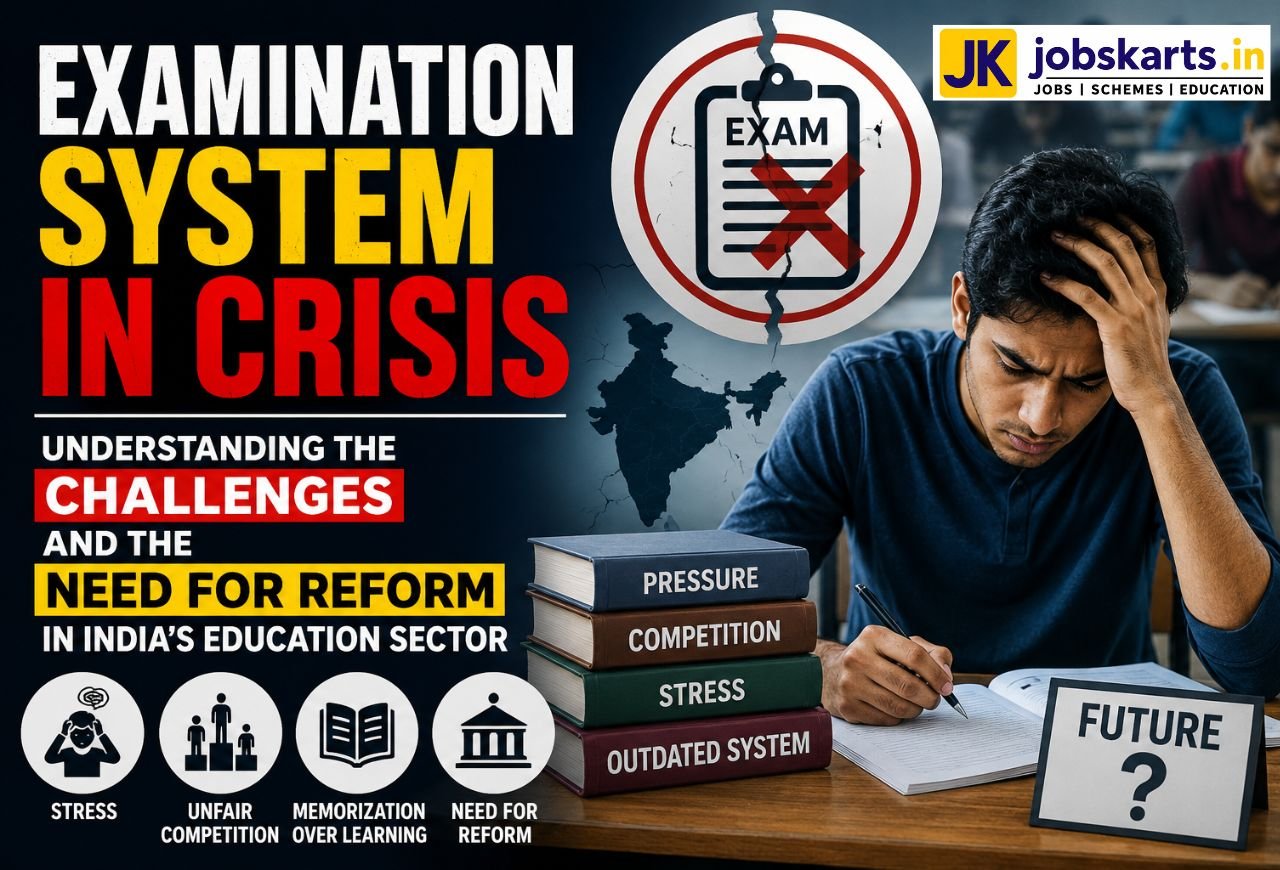
India’s examination system has long been considered the backbone of academic evaluation, but growing concerns over paper leaks, intense competition, outdated assessment methods, and student stress have raised serious questions about its effectiveness. The phrase “Examination System in Crisis” reflects the urgent need to rethink how students are assessed and how educational success is defined. Rather than viewing examinations only as a means of ranking students, education experts increasingly advocate for a balanced approach that promotes learning, creativity, and practical skills. This article explores the current challenges, their impact on students, and possible solutions that can help build a stronger and fairer examination system.
Examination System in Crisis: Overview
| Particulars | Details |
|---|---|
| Topic | Examination System in Crisis |
| Category | Educational Resource |
| Main Concern | Reliability and effectiveness of examinations |
| Key Challenges | Paper leaks, stress, rote learning, unfair practices |
| Affected Groups | Students, parents, teachers, institutions |
| Need for Reform | High |
| Suggested Solutions | Technology, continuous assessment, skill-based evaluation |
| Long-Term Goal | Fair and student-friendly education system |
Understanding the Crisis in the Examination System
The examination system was designed to evaluate students’ understanding and academic readiness. However, over time, it has become heavily focused on marks and rankings. Incidents involving examination irregularities, increasing mental pressure, coaching dependency, and limited opportunities for students with different learning styles have highlighted structural weaknesses. The current model often measures memory more than actual understanding, creating concerns about whether examinations truly reflect a student’s abilities.
Eligibility: Who Is Affected by the Crisis?
The challenges within the examination system affect almost every stakeholder in education. School students preparing for board examinations, aspirants appearing for competitive entrance tests, college students, teachers responsible for assessment, and parents supporting their children all experience the consequences of examination-related stress and uncertainty. Policymakers and educational institutions are also under pressure to restore public confidence in the system.
Benefits of Reforming the Examination System
Reforms can create a more balanced educational environment where students are encouraged to think critically and apply concepts rather than memorising facts. A modern examination system can reduce stress, recognise diverse talents, improve fairness, and better prepare students for real-world challenges. It can also strengthen trust in educational institutions and improve the overall quality of learning outcomes.
Important Milestones in Examination Reforms
| Reform Area | Importance |
|---|---|
| Continuous Assessment | Reduces dependence on one final exam |
| Digital Monitoring | Improves transparency and security |
| Skill-Based Evaluation | Encourages practical learning |
| Teacher Training | Enhances assessment quality |
| Technology Integration | Streamlines examination processes |
| Mental Health Support | Addresses student well-being |
Step-by-Step Process Towards Improvement
Educational reform requires coordinated efforts from multiple stakeholders. Authorities must strengthen examination security and introduce technology-driven safeguards. Schools and colleges should gradually adopt project-based and continuous assessment methods. Teachers need training in modern evaluation practices, while students should be guided toward conceptual understanding instead of rote learning. Parents can support this transition by focusing on growth and effort rather than marks alone.
Common Mistakes That Worsen the Crisis
One major mistake is treating examination scores as the sole indicator of intelligence and future success. Excessive dependence on coaching centres, neglecting mental health concerns, and resisting innovative assessment methods can further deepen the problem. Educational institutions that prioritise rankings over learning may unintentionally contribute to an unhealthy academic environment.
Expert Tips for Students and Parents
Students should focus on understanding concepts, maintaining a healthy study routine, and seeking help whenever they experience academic pressure. Parents can encourage balanced lifestyles and avoid unrealistic expectations based solely on examination results. Teachers should promote curiosity and confidence while helping students develop analytical and communication skills that extend beyond textbooks.
Future Opportunities Through Educational Transformation
A reformed examination system has the potential to create more adaptable, skilled, and confident learners. Future opportunities include increased emphasis on vocational education, interdisciplinary learning, digital literacy, and innovation. Students educated under a balanced system may be better equipped for higher education, entrepreneurship, emerging careers, and lifelong learning in a rapidly changing world.
Important Links
| Description | Link |
|---|---|
| Ministry of Education | Click Here |
| National Council of Educational Research and Training (NCERT) | https://ncert.nic.in |
| National Testing Agency (NTA) | VIsit Here |
| University Grants Commission (UGC) | https://www.ugc.gov.in |
| National Education Policy Information | Check Details |
FAQ:
Q1. Why is the examination system considered to be in crisis?
The system faces criticism due to issues such as paper leaks, excessive stress, overemphasis on marks, and assessment methods that often fail to measure practical understanding and real abilities.
Q2. What can improve the current examination system?
Continuous assessment, stronger security measures, technology integration, skill-based evaluation, and greater focus on student well-being can help create a fairer and more effective examination process.